आयुष
AYUSH AYURVEDA
Clinic & Panchkarma Centre
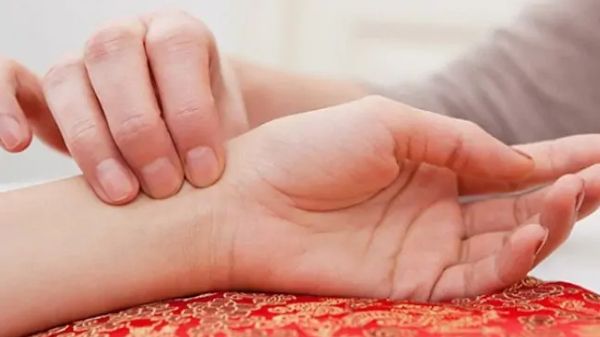
Nadi Parikshan is one of the most powerful and ancient Ayurvedic diagnostic techniques. It involves examining the pulse to know the imbalance of doshas and their properties at the time of examination, aiding in reaching an appropriate and accurate diagnosis for the patient.
Nadi Parikshan, or pulse diagnosis, is a profound diagnostic tool used in Ayurveda for thousands of years. By carefully feeling the radial pulse at the wrist, our expert doctor is able to assess the current state of all three doshas — Vata, Pitta, and Kapha — along with the condition of various body organs and systems. Unlike modern diagnostic methods, Nadi Parikshan does not require any instruments or tests. The trained fingertips of the physician can detect subtle vibrations and rhythms in the pulse that reveal deep information about the patient's physical, mental, and emotional health. This technique allows us to identify the root cause of disease and design the most effective personalised treatment plan.
The patient is advised to be calm and relaxed before the examination. The pulse is most accurately read in the morning on an empty stomach, as physical activity, food, and emotional disturbances can temporarily alter the pulse rhythm.
The doctor places three fingers — index, middle, and ring — on the radial artery at the wrist. Each finger corresponds to a specific dosha: Vata (index), Pitta (middle), and Kapha (ring). The physician carefully feels the movement, speed, rhythm, and quality of the pulse under each finger.
Based on the pulse qualities detected, the current state and imbalance of each dosha is evaluated. Variations in pulse characteristics indicate which dosha is aggravated, deficient, or in harmony, providing a clear picture of the body's internal condition at that moment.
Advanced Nadi Parikshan allows assessment of specific organs and systems — including the heart, liver, kidneys, lungs, and digestive system — by reading deeper levels of the pulse, giving a comprehensive understanding of overall health beyond just the dosha state.
The findings from Nadi Parikshan are combined with other clinical observations to arrive at an accurate Ayurvedic diagnosis. A personalised treatment plan including herbal medicines, therapies, diet, and lifestyle changes is then prepared specifically for the patient's current condition.
Copyright ©2025. All Rights Reserved Ayush Ayurveda Clinic